Garage Door Installation: How to Choose the Right Door for Your Home
A successful garage door installation starts before anyone shows up at your house. The decisions that matter most are material, insulation, and style, in that order, because they set the price range, the maintenance schedule, and how the door will perform through Colorado winters. Once you have those locked in, picking the style, color, and windows is the easy part. Here is how to work through each decision so you can get accurate quotes and avoid surprises on installation day.
Which garage door material makes sense for a Colorado home?
Material is the first and most consequential decision in any installation. It determines what you will pay upfront, what you will spend on upkeep over the next decade, and how well the door holds up through Denver's freeze-thaw cycles, hail storms, and dry summer heat.
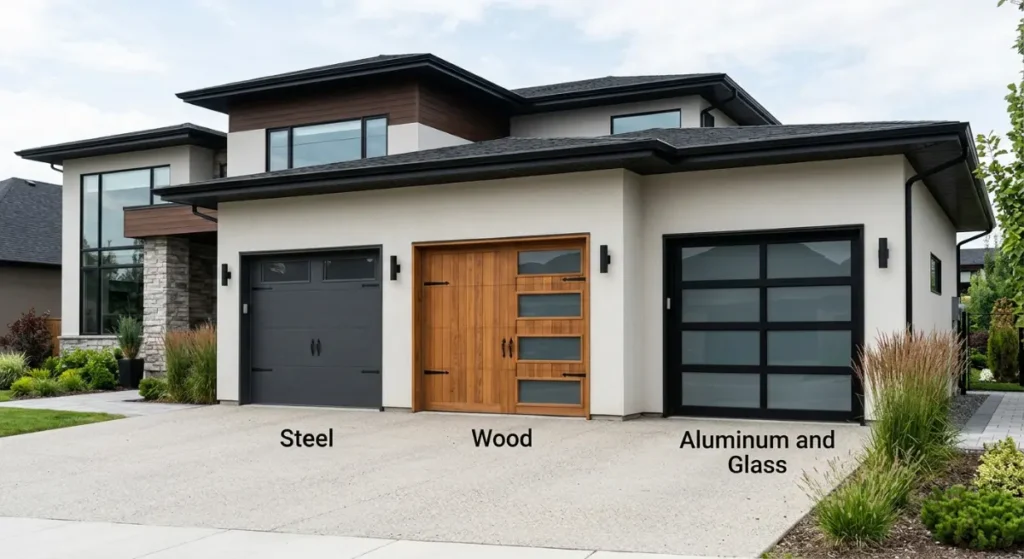
Insulated steel is what we install most often for good reason. It resists dents from everyday use, handles Colorado weather well, and takes insulation well. A quality insulated steel door can reach R-12 to R-18, which is more than enough for an attached or heated garage. It is low maintenance and available in dozens of finishes and panel styles. For a full comparison of materials, see our guide to selecting the right material for your garage door.
Wood looks the best of any material and gives you real design flexibility, but it demands refinishing every two to three years in the dry mountain climate. If you go with wood, budget for upkeep. Composite and faux-wood doors give you most of the wood look on a core that does not warp, crack, or need refinishing on a schedule. Aluminum and glass doors suit contemporary homes and never rust, but they insulate poorly, which is a real cost in Colorado winters.
The comparison table below puts all four materials side by side on cost, insulation, upkeep, and how well they perform locally.
How much insulation does your new door actually need?
In Colorado, insulation is not a nice-to-have. Wide daily temperature swings, cold winters, and hot summers all put stress on a garage that sits between the outside and your living space.
- Detached, unheated garage: R-6 to R-10 is usually enough. You get some thermal benefit without paying for the highest-grade insulation.
- Attached garage: Aim for R-12 or higher. The shared wall between the garage and the house is the biggest path for heat loss in winter and heat gain in summer.
- Heated garage or room above it: Step up to R-16 or R-18. The extra insulation pays back in lower heating bills and a more stable temperature year-round.
The two common insulation types are polystyrene (rigid foam boards between the steel layers, good for detached garages) and polyurethane (foam injected directly into each panel, which bonds to the steel and provides the highest R-values). Polyurethane also stiffens the panel, which makes it quieter and more resistant to denting. For a deeper look at what R-value makes sense for your setup, see our full buyer's guide to choosing the right garage door.
What does a professional garage door installation actually involve?
A standard residential replacement takes a two-person crew 4 to 6 hours from arrival to final test. Knowing the steps helps you prepare your space and spot whether the crew is cutting corners.
Removal and structural check
The crew releases tension on the old springs before touching anything else. This is the most dangerous step of any installation, which is why spring work is not a DIY task. Once the tension is off, the old panels, tracks, and hardware come down and get hauled away. Before the new door goes in, the crew checks the wood jambs and header for rot or damage. Soft framing gets replaced so the new door hangs on solid wood.
Track and panel assembly
The vertical tracks are plumbed and fastened to the framing. Panels go in from the bottom up, connected by heavy-duty hinges, with nylon or steel rollers seated in the tracks as each section is added. The horizontal tracks and rear hangers are fitted last, and the whole assembly is checked for alignment before the springs go on.
Spring calibration and opener integration
The torsion spring or extension spring system is wound to the exact specification for the door's weight. This is not adjustable on the fly: under-wound springs make the door feel heavy and shorten the opener's life; over-wound springs can snap. Once the springs are set, the opener is reconnected, travel limits are calibrated, and the safety sensors are tested. The door should open and close without binding or reversing unexpectedly. For more on what to expect from an installer, read about the importance of professional garage door installation.
How do you find a reliable local installer?
The door matters, but the install matters just as much. A good door on a bad installation will wear out its springs early, void the manufacturer's warranty, and create safety hazards. Here is what to check before you hire anyone.
- Licensed and insured. Ask for a certificate of liability and workers' compensation. If a tech is hurt on your property and the company is not insured, you may be liable.
- On-site estimate, not just a phone number. A real quote requires measuring the rough opening, checking headroom and backroom clearance, and assessing the framing. Any company that gives you a firm price without visiting is guessing.
- Separate labor and parts warranty. The manufacturer covers the door and hardware against defects. The installer should cover their own labor, usually for at least a year. Confirm both in writing before work starts.
- Haul-away included. A complete installation includes removing and disposing of the old door. Confirm this is in the quote.
We offer free on-site estimates, handle the full installation, and haul away the old door. We cover the Denver metro and Front Range communities. Schedule a visit and we will measure, walk you through the material and insulation options that fit your home, and give you a written quote before any work begins.
Garage door materials: what to expect in Colorado
Material is the biggest decision in any garage door installation. It drives the cost, the insulation potential, the upkeep, and how well the door holds up in Colorado's dry, freeze-thaw climate.
| Material | Installed cost (double door) | Insulation potential | Upkeep | Colorado fit |
|---|---|---|---|---|
| Steel (insulated) | $1,200 to $3,500 | Good (R-12 to R-18 available) | Low | Excellent. Handles freeze-thaw and hail well. |
| Wood | $2,500 to $6,000+ | Fair (varies by construction) | High (refinish every 2 to 3 years) | Fair. Looks beautiful but needs regular sealing in dry mountain air. |
| Aluminum and glass | $2,000 to $5,500 | Fair (limited core thickness) | Low | Good for modern homes, but poor insulator in cold winters. |
| Composite / faux wood | $2,000 to $4,800 | Good (similar to steel) | Low | Good. Wood look without the refinishing cycle. |
| Fiberglass | $1,800 to $4,500 | Moderate | Low | Fair. Resists rust but can crack in extreme cold. |
Prices are typical installed ranges for a standard two-car door and vary by size, insulation grade, and window options.
Typical installed cost by material (2-car door, Denver metro)
- Steel (insulated)
- $1,200 to $3,500
- Fiberglass
- $1,800 to $4,500
- Composite / faux wood
- $2,000 to $4,800
- Aluminum and glass
- $2,000 to $5,500
- Wood
- $2,500 to $6,000+
Garage door replacement consistently ranks as one of the highest return-on-investment home projects, recovering close to its full cost at resale.
Source: Remodeling Cost vs. Value Report
Sources and references
- 1.Garage door replacement return on investment — Remodeling Cost vs. Value Report
- 2.Insulation R-value guidance for attached garages — ENERGY STAR
- 3.Garage door installation standards — Door & Access Systems Manufacturers Association (DASMA)
Part of this guide
Complete GuideThe Ultimate Guide to Choosing the Right Garage Door for Your Home- Why Professional Garage Door Installation Is Worth the CostA garage door is the heaviest moving part of most homes. The springs that balance it store enough energy to cause serious injury if they release suddenly. Professional installation handles those risks correctly and keeps the manufacturer's warranty intact.Read guide
- Selecting the Right Material for Your Garage DoorFor most Denver homes, insulated steel is the right material. It handles Colorado's freeze-thaw cycles, costs less than wood, and needs far less upkeep. Here is how every material compares before you buy.Read guide
- Garage Door Styles in Denver: 7 Options for Curb AppealDenver homes span colonial, craftsman, ranch, farmhouse, and modern builds. The right door style depends on your architecture first, then your climate needs. Here are the seven options we install most often in the Denver metro.Read guide
- The Most Reliable Garage Door Brands in DenverBrand matters for a garage door, but the right brand depends on what you're buying it for. We compare the five brands we install most often in the Denver metro on durability, warranty, insulation options, and how they handle Colorado's specific conditions.Read guide
Technical resources
Related services
G Brothers provides these services across the Denver metro, from Lakewood and Arvada to Centennial and Thornton.
Frequently asked questions
How much does a new garage door cost?
How much does a new garage door cost? Most Front Range installs run $700 to $3,000 for the door and labor, with custom and double doors higher.
Read full answerHow long does a garage door installation take?
How long does a garage door installation take? Most installs run 4 to 6 hours, same-day completion is the norm. Here is what changes the timeline.
Read full answerWhen should you replace a garage door?
When to replace a garage door instead of repairing it: most last 15 to 30 years, but age, repeat repairs, and rising bills can tip the call to a new one.
Read full answerHow do I choose a reliable garage door company?
Choosing a garage door company? Here are the checks that separate a reliable local pro from a fly-by-night operator, and the red flags to walk away from.
Read full answerDo I need a permit for a garage door?
Do you need a permit for a garage door? Replacing a door or opener in the same opening usually does not. Changing the opening or structure usually does.
Read full answerDo you haul away my old garage door?
Yes, we remove and haul away your old garage door as part of installation. Here's what's included, how disposal works, and what gets recycled.
Read full answerDoes a new garage door come with an opener?
Not always. A new garage door and the opener are usually priced separately. Here's when an opener is included, when to reuse yours, and when to upgrade.
Read full answerHave a garage door problem now?
Tell us what your door is doing and we will tell you what is likely wrong and what it costs. Same-day service across the Denver metro.