Repair
How do I test my garage door safety sensors?
Happening to you right now? Here's how we fix it: safety check before selling
These photo-eye sensors are the part that keeps a closing door from landing on a child, a pet, or a car bumper, so testing them is worth doing a few times a year.
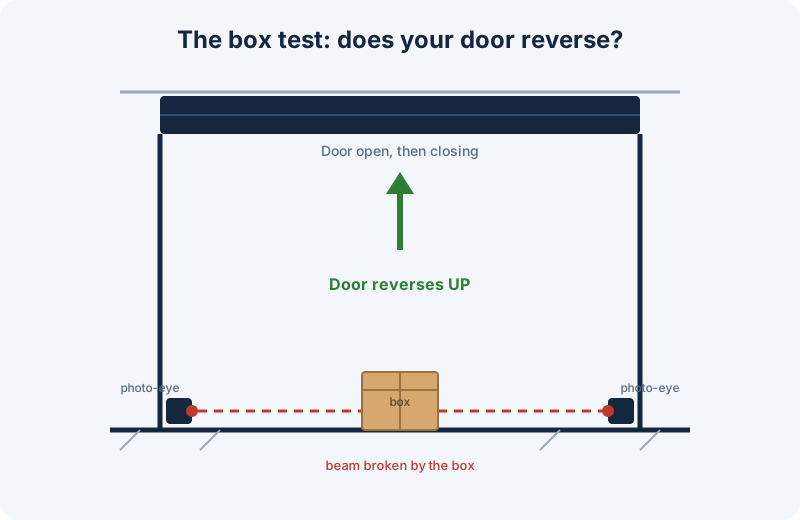
How to test garage door safety sensors with the box test
This is the test that proves the system actually stops a closing door:
- Open the door fully with the remote or wall button.
- Set a cardboard box (or a tall object) in the doorway, directly in the beam's path, a few inches off the floor.
- Press the wall button to close. Hold it if your opener needs constant pressure for a safety test.
- Watch the door. The instant it senses the box, it should stop and reverse all the way back up.
If the door keeps closing onto the box or doesn't reverse, stop using the automatic close and treat it as a failed test. Do not tape over or disable the sensors to force the door shut.
Reading the sensor LED lights
Each photo-eye has a small LED that tells you its status:
- Both lights steady: the sensors are aligned and seeing each other.
- One light off or blinking: that sensor is misaligned, dirty, or losing power.
- A light that flickers when you pass a hand near it: the wiring may be loose.
If a light won't stay steady, the next step is cleaning and aiming the eyes. Our guide to garage door sensor alignment walks through that fix.
How often to test your safety sensors
Test the sensors at least once a month, and again after anything that could knock them loose: a bumped bracket, a car tap, snow shoveled against them, or a storm. Homes with kids or pets should test more often, since this is the system standing between a closing door and someone underneath it. It takes two minutes and tells you in one push whether the safety still works.
Make it part of a routine you already have, like the start of each month or when you change the smoke-detector batteries, so it does not get forgotten. While you are down there, wipe the lenses with a soft dry cloth, since a film of dust is one of the most common reasons a sensor stops seeing its partner along our dusty Front Range.
What a failed sensor test means
A door that won't reverse points to one of these:
- Misaligned eyes from a bump or loose bracket.
- Dirty lenses blocked by dust, cobwebs, or condensation, which is common in our gritty, snow-melt season.
- Damaged wiring from staples or rodents.
- A failed sensor after water exposure or age.
- An opener force setting problem, which ties into the door's auto-reverse safety system rather than the sensors alone.
Don't bypass a failed sensor
It is tempting to hold the wall button down to force a door shut past a failed sensor, or to twist the eyes so they miss each other. Both remove the protection the law requires and the reason the system exists. A door closing with no working reverse can land on a child or pet with enough force to injure. If the door won't close because a sensor is faulty, leave it open and get the sensor fixed rather than working around it.
When to call a pro
If you've cleaned and aimed the sensors and the door still won't reverse, do not bypass the safety to keep using the door. A tech can test the sensors, the wiring, and the opener's force settings in one visit and replace whatever has failed.
A door that won't close or won't reverse is one of our most common repair calls, and a sensor fix is usually same-day. Call (720) 421-6489 or see the services page for flat-rate pricing.
People also ask
How do I fix garage door sensors that won't align?
Fix garage door sensor alignment yourself: read the LED colors, clean the lenses, level the brackets, and check the wiring so your door stops reversing.
Read full answerWhy does my garage door reverse before closing?
Why your garage door reverses before closing: misaligned sensors, a dirty lens, a touchy close-force setting, or a blocked track, and how to fix it.
Read full answerHow does garage door auto-reverse safety work?
How garage door auto-reverse safety works: two federally required systems, the photo-eye beam and the force sensor, that stop and reverse a closing door.
Read full answerHow do I make my garage door safe for kids and pets?
Make your garage door safe for kids and pets with working auto-reverse, aligned photo-eye sensors, a high wall button, and rolling-code remotes.
Read full answerCurrent offers
Save while you are here
Browse our current specials and claim the one that fits your door.
$30 Garage Door Lube & Tune
Lubrication and adjustment with a 21-point safety inspection and a full sensor check. Catch small issues before they become expensive repairs.
Claim this offerUp to 10 Free Rollers with Garage Door Repair
Get up to 10 free standard garage door rollers with a garage door repair. The free rollers are the part only; labor is not included.
Claim this offerBuy One, Get One Free Garage Door Spring
Buy one garage door spring and get the second spring free, part only, when your door needs two springs.
Claim this offerHave a garage door problem now?
Tell us what your door is doing and we will tell you what is likely wrong and what it costs. Same-day service across the Denver metro.