Repair
How does garage door auto-reverse safety work?
Happening to you right now? Here's how we fix it: door falls fast when closing
Understanding both systems matters, because a door can pass one test and still fail the other.
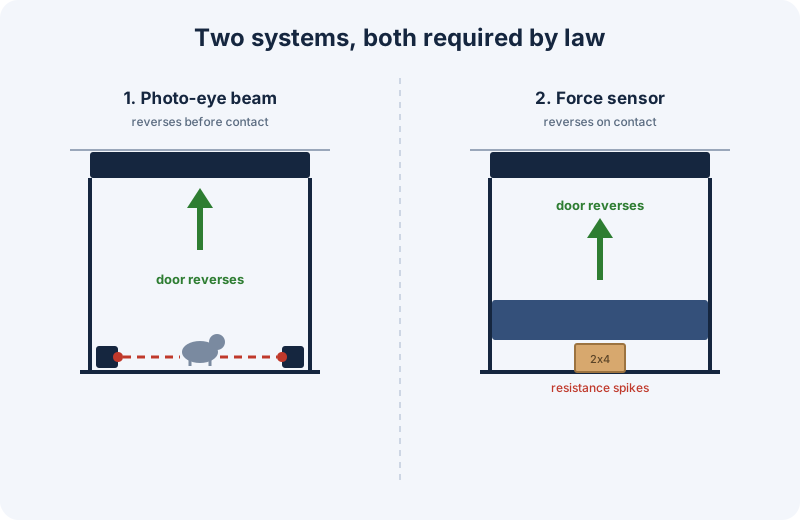
The two garage door auto-reverse safety systems
After a series of child injuries, U.S. safety rules (UL 325, backed by the Consumer Product Safety Commission) required two separate entrapment protections on every residential opener made after January 1, 1993. They work in different ways on purpose:
- Photo-eye sensors (the beam): two small units mounted within six inches of the floor send an infrared beam across the opening. Break the beam and the closing door reverses, even before anything is touched.
- Force sensor (mechanical reversal): the opener measures how much force it takes to move the door. If the door hits an object and resistance spikes, the opener reverses it.
The beam catches things in the doorway. The force sensor catches anything the beam misses, like a low object below the beam line.
How the photo-eye system works
The two sensors face each other across the bottom of the opening. As long as the beam connects, the door is free to close. The moment something breaks it, a pet darting through or a bike left in the path, the opener reverses immediately. Most false reverses trace back to a dirty lens or a bumped bracket rather than a real obstruction. If your door reverses for no reason, start with sensor alignment and cleaning.
How the mechanical force reversal works
The force system is the backup. The opener learns how hard it normally has to push to close the door. If the door meets unexpected resistance, an object, a binding track, or an out-of-balance door, the opener treats it as an obstruction and reverses. The standard bench test for this is the 2x4 board test: lay a flat board on the floor in the door's path, and the door should reverse when it touches the wood.
How to test that both systems work
Test each system separately so you know both are live:
- Beam test: set a box in the doorway and close the door. It should reverse before touching the box. The full routine is in our guide to testing your garage door sensors.
- Force test: lay a 2x4 flat on the floor under the door and close it. The door should reverse the moment it contacts the board.
Run both at least once a month. A door can pass the beam test and still fail the force test if the opener's pressure setting has drifted.
When auto-reverse fails
A door that won't reverse, or one that reverses on its own with nothing in the way, has a real safety fault. Common causes are misaligned or dirty sensors, a force setting that's too high, worn springs that throw off the door's balance, or a door that reverses before it reaches the floor. Never disable the sensors or crank the force up to force a door shut. That removes the protection the system exists to provide.
When to call a pro
If either test fails after you've cleaned and aligned the sensors, have a tech check it. Setting the force limits correctly takes a trained hand, because too little force makes the door reverse on its own and too much defeats the safety. We test and adjust both systems on a single visit.
Auto-reverse is the most important safety feature on your door. Call (720) 421-6489 or see the services page for flat-rate pricing.
Related garage door guides
People also ask
How do I fix garage door sensors that won't align?
Fix garage door sensor alignment yourself: read the LED colors, clean the lenses, level the brackets, and check the wiring so your door stops reversing.
Read full answerWhy does my garage door reverse before closing?
Why your garage door reverses before closing: misaligned sensors, a dirty lens, a touchy close-force setting, or a blocked track, and how to fix it.
Read full answerHow do I test my garage door safety sensors?
How to test garage door sensors: run the box obstruction test, read the LED lights, and confirm the door reverses. A two-minute safety check anyone can do.
Read full answerHow do I make my garage door safe for kids and pets?
Make your garage door safe for kids and pets with working auto-reverse, aligned photo-eye sensors, a high wall button, and rolling-code remotes.
Read full answerCurrent offers
Save while you are here
Browse our current specials and claim the one that fits your door.
$30 Garage Door Lube & Tune
Lubrication and adjustment with a 21-point safety inspection and a full sensor check. Catch small issues before they become expensive repairs.
Claim this offerUp to 10 Free Rollers with Garage Door Repair
Get up to 10 free standard garage door rollers with a garage door repair. The free rollers are the part only; labor is not included.
Claim this offerBuy One, Get One Free Garage Door Spring
Buy one garage door spring and get the second spring free, part only, when your door needs two springs.
Claim this offerHave a garage door problem now?
Tell us what your door is doing and we will tell you what is likely wrong and what it costs. Same-day service across the Denver metro.