Repair
How do I make my garage door safe for kids and pets?
Federal safety rules have required these protections on openers since 1993, but they only protect your family if they still work. Here is what to check and how.
The safety features every garage door should have
Modern openers carry two layers of protection that have to be working together:
- Auto-reverse on contact. If the closing door hits an object, it must reverse and go back up. This guards against a door closing on a child, a pet, or a car.
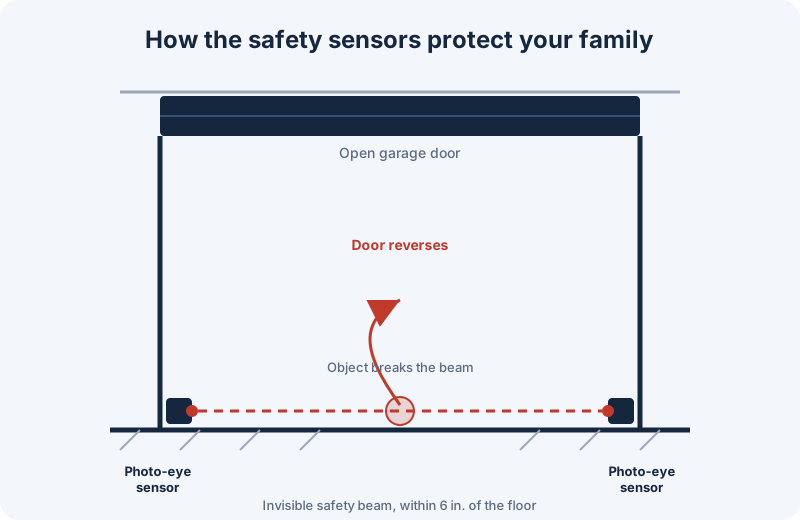
- Photo-eye sensors. Two small sensors sit within 6 inches of the floor on each side of the door. They shoot an invisible beam across the opening, and if anything breaks the beam while the door is closing, the door stops and reverses.
- A wall button mounted high. The wall control should be at least 5 feet off the floor so children cannot reach it.
- Rolling-code remotes. These change the access code with each use, so a stored remote cannot be copied and the door cannot be opened by a neighbor's matching code.
- Pinch-resistant panels. Newer door sections are shaped so the joints will not catch and pinch fingers as the door folds.
How to test your garage door's safety monthly
These two tests take five minutes and catch most problems:
- The reverse test. Place a solid object on the floor in the door's path, like a roll of paper towels or a 2 by 4 laid flat. Close the door with the button. The moment it touches the object it should stop and reverse. If it keeps pushing, the force setting is off and needs a tech.
- The photo-eye test. Start the door closing, then wave a broom handle through the beam near the floor. The door should stop and go back up. If it keeps closing, the sensors are misaligned, dirty, or faulty.
- Check the sensor alignment. The two sensor lights should glow steady, not blink. A blinking light means they are out of line. Our garage door sensor alignment guide shows how to nudge them back.
If your door reverses on its own when nothing is in the way, that is a related sensor or track issue covered in why a garage door reverses before closing.
Everyday habits that keep kids and pets safe
The hardware does its part, but daily habits matter just as much:
- Keep remotes away from children. Treat them like car keys, not toys. A child pressing a remote can start the door moving while someone is under it.
- Teach kids to stay clear. No running under a closing door, and no playing with the wall button or sensors.
- Watch pets near the opening. Cats and small dogs can dart under a closing door faster than the sensor reacts if the beam is set too low or blocked.
- Use the lock or vacation mode when you travel so the door cannot be opened while you are away.
- Mind the sensors in Colorado weather. Sun glare, frost, cobwebs, and dust can throw a photo-eye out of alignment, so wipe the lenses during your monthly check.
What to do if a safety test fails
If the door does not reverse on contact, or it keeps closing when the beam is blocked, stop using the automatic close until it is fixed. A door that will not reverse is exactly the hazard the safety features exist to prevent. In the meantime, close the door by holding the wall button so you stay in control of it, and keep kids and pets clear of the opening. Then book a tech to reset the force, realign or replace the sensors, and confirm the auto-reverse works before you rely on it again.
When to call a pro
Call a tech if the door fails either safety test, if the sensors will not stay aligned, or if the auto-reverse is weak or inconsistent. Force settings, sensor wiring, and a worn logic board are where a pro makes sure the safety system actually protects your family.
Our crews across Denver, Lakewood, and the Front Range can test and adjust the reverse force, realign or replace sensors, and confirm every safety feature is working as part of a tune-up. A yearly safety inspection is cheap insurance for a household with kids or pets. Call our 24/7 line at (720) 421-6489 to book a safety check.
People also ask
How do I fix garage door sensors that won't align?
Fix garage door sensor alignment yourself: read the LED colors, clean the lenses, level the brackets, and check the wiring so your door stops reversing.
Read full answerWhy does my garage door reverse before closing?
Why your garage door reverses before closing: misaligned sensors, a dirty lens, a touchy close-force setting, or a blocked track, and how to fix it.
Read full answerWhat is Security+ 2.0 rolling code, and how does it keep my garage safe?
Security+ 2.0 is LiftMaster and Chamberlain's encrypted rolling-code system.
Read full answerHow do I set up auto-close (timer-to-close) on my garage door?
Auto-close needs an opener that supports a timer-to-close feature plus working safety photo-eyes.
Read full answerCurrent offers
Save while you are here
Browse our current specials and claim the one that fits your door.
$30 Garage Door Lube & Tune
Lubrication and adjustment with a 21-point safety inspection and a full sensor check. Catch small issues before they become expensive repairs.
Claim this offerUp to 10 Free Rollers with Garage Door Repair
Get up to 10 free standard garage door rollers with a garage door repair. The free rollers are the part only; labor is not included.
Claim this offerBuy One, Get One Free Garage Door Spring
Buy one garage door spring and get the second spring free, part only, when your door needs two springs.
Claim this offerHave a garage door problem now?
Tell us what your door is doing and we will tell you what is likely wrong and what it costs. Same-day service across the Denver metro.