General
Garage door maintenance: how often and what's done
Happening to you right now? Here's how we fix it: not serviced in years
That is the schedule. Here is what a real maintenance visit includes and why skipping it costs more in the long run.
How often to service a garage door
Once a year is the baseline, but match the interval to how hard the door works:
- Average home, door used a few times a day: once a year is plenty.
- Garage as the main entry, many cycles a day: twice a year keeps wear in check.
- Older door, or one already noisy: service it now, then yearly.
- After a hard winter: a spring check in late winter catches cold-stressed parts.
A garage door spring is rated for about 10,000 cycles, so a busy household burns through that life faster. Yearly upkeep is the cheapest way to get the full service life out of springs, rollers, and the opener.
What garage door maintenance includes
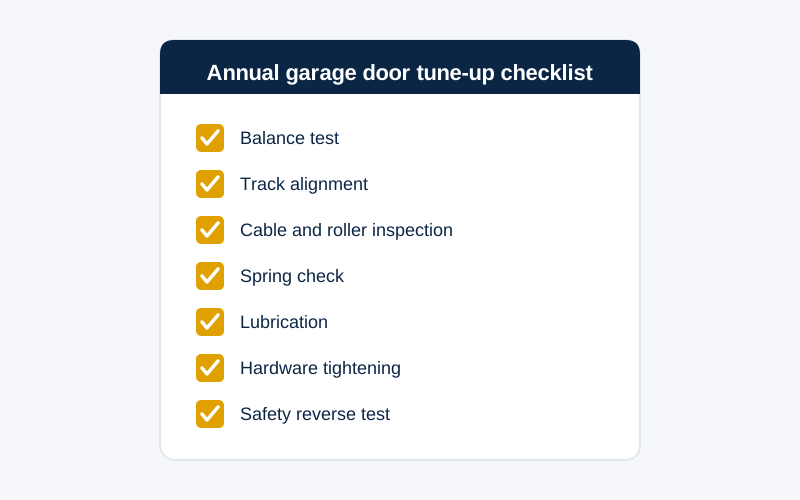
A proper tune-up is a full inspection plus the small adjustments that prevent big repairs. A service visit covers:
- Balance test. With the opener disconnected, the door is lifted halfway by hand. A balanced door stays put. One that drops or rises is out of balance and stresses the opener.
- Track alignment. The tracks are checked for square and the brackets tightened so the rollers run clean.
- Cable and roller inspection. Frayed cables and worn rollers are caught before they snap or seize.
- Spring check. The springs are inspected for gaps, rust, and wear, and the tension is checked.
- Lubrication. The rollers, hinges, springs, and bearings get the right lubricant so the door runs quiet.
- Hardware tightening. Bolts and brackets loosened by vibration are snugged back up.
- Opener and safety test. The travel limits, the force settings, and the safety reverse are all tested.
That last step matters most. A door that does not reverse on contact is a safety risk, and a tune-up confirms it works. If your door has already gotten loud, our noisy garage door repair and maintenance covers the same checks plus the fix for the racket.
Is a tune-up worth it?
Yes, for almost every door a tune-up is worth it. A garage door cycles thousands of times a year under spring tension, and a tune-up runs $15 to $50, far less than the cost of a broken spring, a snapped cable, or a burned-out opener. Spending a little on a planned visit to avoid a part failure and an emergency call is one of the clearest value calls in home upkeep.
There is a common myth that garage doors do not need maintenance, that you install one and forget it. That holds right up until a spring snaps on a cold morning and the door will not move. Doors are mechanical: springs fatigue, rollers wear flat, cables fray, and lubricant dries out. Skipping service does not save money, it just defers a bigger bill to a worse time.
You can skip a paid visit in one case: a newer door you already service yourself, where you lubricate the parts, test the balance, and the door runs quiet and smooth. Even then, have a tech check the springs and safety reverse every couple of years, since those are the parts that fail hard. If your door is older, noisy, or you have never had it serviced, a tune-up is worth booking now.
Why yearly maintenance pays off
A garage door is the largest moving part of your home, and small problems compound fast. A dry roller wears a flat spot, which throws the door off balance, which makes the opener strain, which shortens the motor's life. One $15 to $50 tune-up interrupts that chain before any of it turns into a repair bill.
Maintenance also keeps the door safe. Springs and cables under tension fail without warning when they are neglected, and a worn safety reverse can let a closing door land on a car or a person. Catching a frayed cable or a tired spring during a planned visit is far cheaper and safer than an emergency call after it snaps. G Brothers runs a low-cost tune-up special for exactly this reason.
What you can do between visits
You do not need tools to keep an eye on the door between professional services. A few habits help:
- Listen. New grinding, popping, or squealing means something needs attention.
- Watch the travel. A door that jerks, hesitates, or sits crooked is telling you something.
- Wipe the sensors. Clean the photo-eye lenses near the floor so the door closes reliably.
- Test the balance. Once or twice a year, disconnect the opener and lift the door halfway by hand.
- Skip heavy DIY. Leave springs, cables, and tension adjustments to a tech.
These checks take minutes and tell you when to book a visit before a small issue grows.
Book a maintenance tune-up
A yearly garage door maintenance visit is the cheapest insurance against a surprise breakdown, and we make it easy with flat-rate pricing, free estimates, and veteran, senior, and first-responder discounts. To get your door inspected, balanced, and lubricated, see our garage door services and we will set a time.
A door that is serviced once a year is a door that opens quietly, closes safely, and rarely strands you, which is the whole point of keeping up with it.
Related garage door guides
People also ask
How often should I lubricate my garage door?
How often to lubricate a garage door: twice a year for most homes, more in dry Colorado air. Learn which parts to grease and which lubricant to use.
Read full answerWhat are the signs my garage door needs repair?
The signs a garage door needs repair: new noises, a sagging door, slow or jerky movement, and a door that will not stay put halfway up.
Read full answerWhat's on a garage door maintenance checklist?
What's on a garage door maintenance checklist? Lubricate parts, test the balance and auto-reverse, tighten hardware, and check rollers, cables, and seals.
Read full answerWhat does a garage door maintenance plan include?
A garage door maintenance plan includes a set number of scheduled tune-up visits a year, priority booking, reminders, and a written condition report each time. Repairs and parts are quoted separately. G Brothers charges $480 a year for four visits, against $150 for a single visit booked on its own.
Read full answerCurrent offers
Save while you are here
Browse our current specials and claim the one that fits your door.
$30 Garage Door Lube & Tune
Lubrication and adjustment with a 21-point safety inspection and a full sensor check. Catch small issues before they become expensive repairs.
Claim this offerUp to 10 Free Rollers with Garage Door Repair
Get up to 10 free standard garage door rollers with a garage door repair. The free rollers are the part only; labor is not included.
Claim this offerBuy One, Get One Free Garage Door Spring
Buy one garage door spring and get the second spring free, part only, when your door needs two springs.
Claim this offerHave a garage door problem now?
Tell us what your door is doing and we will tell you what is likely wrong and what it costs. Same-day service across the Denver metro.