Repair
Why is there a gap under my closed garage door?
Happening to you right now? Here's how we fix it: gap at the side of the door
Finding the cause is mostly a matter of looking at where and how the daylight shows. A gap straight across is a different problem than a gap on one corner.
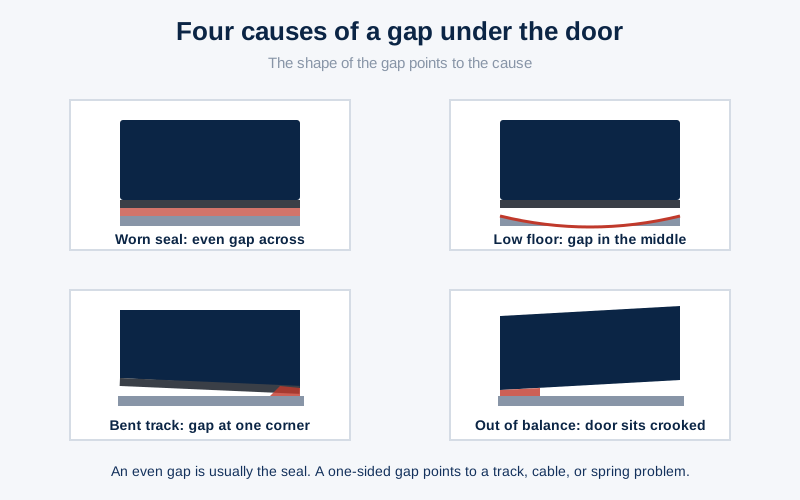
What causes a gap under the garage door
Read the shape of the gap to point at the cause:
- An even gap all the way across. Almost always the bottom seal: worn flat, cracked, shrunk in the cold, or too short for the door. This is the most common cause and the easiest fix.
- A gap that grows toward one corner. The door is sitting crooked. That points to a cable, spring, or track problem on the low side, not the seal.
- A gap only in the middle. Often a settled or low spot in the concrete, or a wide door that sags slightly between the ends.
- A gap that appeared after a cold snap. Rubber stiffens and shrinks in deep cold, so an old seal can pull back from the floor in winter.
Fixing a gap from a bad seal
If the gap is even across and the rubber looks worn, cracked, or hard, a new bottom seal closes it. Match the new seal's profile to your retainer and, if the floor is slightly low, step up to a taller seal that bridges the gap. Our step-by-step on bottom seal replacement walks through it.
For an uneven floor, a few options work depending on how big the low spot is:
- A taller or U-shaped bottom seal to span a shallow dip.
- A threshold seal glued to the floor itself, which is good for water and a sloped apron.
- Both together for a stubborn gap, the seal on the door meeting the threshold on the floor.
A threshold seal is also the better choice if water runs in during Front Range thunderstorms, since it builds a small dam at the opening.
When the gap means a door problem
Sometimes the seal is fine and the door is the issue. A gap that is worse on one side usually means the door is not hanging level. Causes include a stretched or broken cable, a tired spring on one side, or a bent or misaligned track. The door closes until one corner hits the floor while the other still floats, leaving a wedge of daylight.
This is more than a draft. A crooked door wears rollers and tracks faster and can eventually jump off track. If a new seal does not fix the gap, or the gap is clearly one-sided, treat it as a balance or hardware issue and have it checked. These are also the kinds of warning signs worth catching early.
Why closing the gap matters in Colorado
A gap under the door is not just uncomfortable. It lets heated air escape and cold air in, which runs up the bill on an attached garage. It invites mice, spiders, and leaves. And it lets snowmelt run under the door, where it can refreeze and bond the seal to the slab so the door freezes to the ground. Sealing the bottom edge is one of the cheapest comfort and pest upgrades you can make here.
When to call a pro
A worn seal on an even gap is a fair DIY fix. Call a tech when the gap is one-sided, a new seal does not close it, or you suspect a cable, spring, or track problem behind it, since those involve the door's tension and balance.
Our crews across Denver, Lakewood, and the Front Range can find the real cause, replace seals or thresholds, and correct a door that is hanging crooked, all with flat-rate pricing. To get the gap under your door closed for good, call our 24/7 line at (720) 421-6489.
People also ask
How do I replace the garage door bottom seal?
How to replace a garage door bottom seal: identify the retainer, measure the door width, slide out the old seal, and feed in the new one. A doable DIY job.
Read full answerGarage door frozen to the ground? How to free it
Garage door frozen to the ground? Don't force the opener. Here is how to safely free a door frozen to the slab and keep it from freezing again this winter.
Read full answerWhy is there a gap at the top of my garage door?
A gap at the top of a closed garage door usually means the top seal is worn, the top fixtures need adjusting, or the opener stops the door short of full close. Less often the top section is bowed or the header has settled. Only the seal is a cheap fix.
Read full answerWhy does my garage door shake or shudder when it opens?
A shaking or shuddering garage door usually means worn rollers, a bent or dirty track, or loose hardware causing the door to bind as it moves.
Read full answerCurrent offers
Save while you are here
Browse our current specials and claim the one that fits your door.
$30 Garage Door Lube & Tune
Lubrication and adjustment with a 21-point safety inspection and a full sensor check. Catch small issues before they become expensive repairs.
Claim this offerUp to 10 Free Rollers with Garage Door Repair
Get up to 10 free standard garage door rollers with a garage door repair. The free rollers are the part only; labor is not included.
Claim this offerBuy One, Get One Free Garage Door Spring
Buy one garage door spring and get the second spring free, part only, when your door needs two springs.
Claim this offerHave a garage door problem now?
Tell us what your door is doing and we will tell you what is likely wrong and what it costs. Same-day service across the Denver metro.