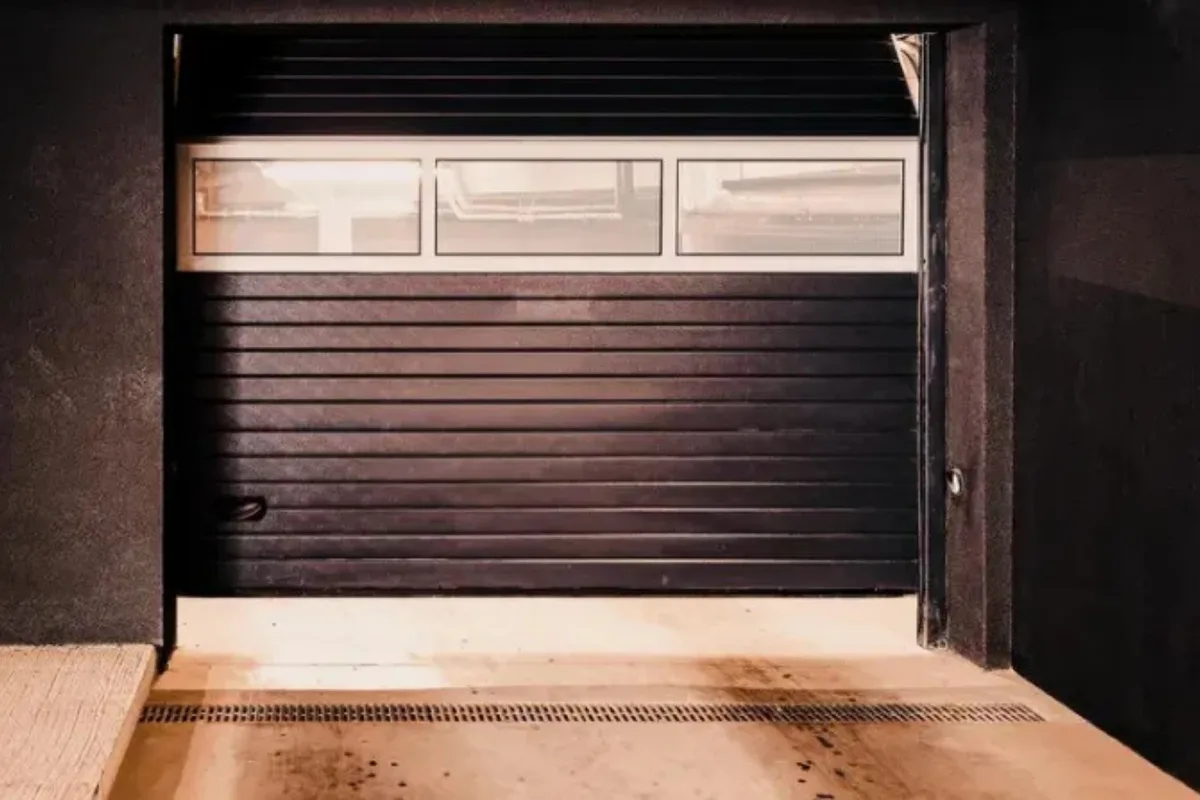
What Is an Overhead Door? Types, Benefits, and How to Choose
An overhead door is any door that opens vertically and stores parallel to the ceiling when fully open. Most residential garage doors are overhead doors. The term covers several different designs: sectional, roll-up, high-speed, full-view glass, and side-hinged. For nearly every Denver home, a sectional overhead door is the right choice because it insulates well, fits any headroom configuration, and comes in the widest range of styles. The comparison table and cost chart below show how all five types stack up.
What makes a door an overhead door?
The defining feature is the direction of travel. An overhead door opens by moving vertically: panels ride up along a track system and rest parallel to the ceiling when fully open. This means the door doesn't swing outward into the driveway and doesn't slide sideways, so it uses no ground clearance in front of or beside the opening. That's the practical advantage that made overhead doors the residential standard starting in the early 20th century.
The term "overhead door" is sometimes used as a brand name (Overhead Door Corporation is one of the oldest manufacturers), but it's also the generic category name for any door that operates this way. Most residential garage doors, from basic raised-panel steel to full-view glass, are overhead doors in the generic sense. For an overview of what's available, see our garage door types guide.
What are the main types of overhead doors and how does each work?
The comparison table above covers all five in detail. Here's what each means in practice.
Sectional overhead doors are the residential standard. They consist of 4 to 5 horizontal panels hinged together. As the door opens, the panels bend at the hinges and the entire assembly rises up along curved tracks, ending parallel to the ceiling. Sectional doors take insulation well because each panel can be filled with polyurethane or polystyrene foam. They come in the widest range of styles, materials, and finishes. For most Denver homes, sectional is the right type by default unless there's a specific headroom or design constraint. For a full breakdown of the buying decision, see our garage door buyer's guide.
Roll-up or rolling steel doors use corrugated steel slats that coil into a drum mounted just above the opening. They need almost no overhead headroom, which makes them the right pick for commercial spaces and garages where the ceiling starts immediately above the door header. They're also very durable and low-maintenance. Residentially, they're less common because they offer fewer style options and insulate less effectively than sectional doors.
High-speed overhead doors open and close much faster than standard doors, typically in 2 to 3 seconds rather than 10 to 15. They're designed for facilities where a door cycles dozens or hundreds of times per day: warehouses, cold storage facilities, car washes, and loading docks. The fast operation reduces air infiltration from each cycle, which matters in temperature-controlled environments. Residentially, they're rare.
Full-view aluminum and glass doors operate like sectional doors on the same track system, but the panels are aluminum frames filled with glass rather than insulated steel. They let in significant natural light and make a strong architectural statement. They're popular in modern and contemporary residential applications, auto showrooms, and studios. For Colorado, ask about impact-rated glass options for hail-prone areas and thermal-break aluminum frames to improve insulation. For more on glass options, see our window and glass options FAQ.
Side-hinged or swing-out doors are the non-track option. The panels hang from hinges on the door frame and swing outward like French doors. They require no track system overhead and no spring mechanism, which makes them mechanically simple. The trade-off is that they require clear space in front of the opening to swing out. They suit carriage-house aesthetics, barn-style garages, and low-traffic applications. They're rare on attached residential garages because they don't automate as naturally and require driveway clearance.
What are the advantages of overhead doors for residential use?
The vertical operation is the core advantage, but there are several practical benefits that follow from it.
- No driveway intrusion. The door doesn't swing out into the apron or driveway, so you can park close to the door without blocking its operation.
- Compatibility with automatic openers. Sectional and roll-up doors both work with standard opener systems, including smart openers with remote access and camera integration.
- Insulation options. Sectional doors in particular support high-R-value insulation, which matters for Colorado's energy costs and comfort in attached garages.
- Security. Modern overhead doors include built-in locks, tamper-resistant brackets, and opener systems with rolling security codes that change with every use.
- Style range. Sectional overhead doors come in traditional, carriage-house, contemporary flush, and custom configurations, so the type doesn't constrain the look.
How do you choose the right overhead door for a Colorado home?
For most attached residential garages in Denver, the decision path is: sectional type, insulated steel material, R-12 or higher insulation, and a style that matches the home's architecture. From there, size and finish choices finish the spec. For sizing, see our garage door size guide. For insulation guidance specific to Colorado, see our insulation value FAQ.
The spring system is the part that requires the most care. Torsion springs above the door store significant mechanical energy, and improperly tensioned springs are one of the most common causes of door failure and injury. Professional installation ensures the spring is correctly sized for the door weight and calibrated for the specific opening. For typical installation timelines, see our installation time FAQ. For cost reference, see our new door cost guide.
Already have an overhead door that sticks, sags, or has come off its track? That is repair work, not replacement. See our overhead garage door repair service.
Ready to pick a door that fits your space? Get a free estimate and we'll measure your opening, check your headroom, and show you the options that work for your garage.
Overhead door types compared
How the five main overhead door types compare on operation, best use, headroom requirement, and insulation capability.
| Type | How it opens | Best use | Headroom needed | Insulation |
|---|---|---|---|---|
| Sectional (most common) | Hinged panels ride up tracks, lie flat at ceiling | Homes and most businesses | Standard (12 to 18 inches above opening) | Excellent: polyurethane or polystyrene fills each panel |
| Roll-up / rolling steel | Steel slats coil into a drum above the opening | Commercial, low-headroom spaces | Minimal (drum sits just above opening) | Fair: typically a single steel skin with weather seals |
| High-speed | Motor-driven, opens faster than standard speed | Warehouses, cold storage, high-traffic doors | Standard to high | Good: tight seals reduce air loss even at speed |
| Full-view aluminum + glass | Sections ride up tracks same as sectional | Modern homes, showrooms, studios | Standard | Fair to good: thermal break frames improve performance |
| Side-hinged / swing-out | Panels swing outward on side hinges | Carriage-house look, barns, low-traffic | None required overhead | Good: solid construction; no mechanical track system |
Sectional doors account for the majority of residential installations. Roll-up and high-speed types are primarily commercial.
Typical installed cost by overhead door type (residential, 2-car size)
- Roll-up / rolling steel
- $1,000 to $3,500
- Sectional (standard insulated)
- $1,200 to $3,500
- Sectional (carriage-house style)
- $1,500 to $5,000
- Full-view aluminum + glass
- $2,000 to $6,000
- Side-hinged
- $1,500 to $4,500
A quality overhead door, properly installed and maintained annually, can last 15 to 30 years depending on the material, cycle frequency, and climate conditions.
Source: Door and Access Systems Manufacturers Association (DASMA)
Sources and references
- 1.Residential and commercial garage door standards — Door and Access Systems Manufacturers Association (DASMA)
- 2.Insulation and R-value guidance for attached garages — ENERGY STAR
- 3.Garage door safety and product testing standards — Underwriters Laboratories (UL)
Part of this guide
Complete GuideThe Ultimate Guide to Choosing the Right Garage Door for Your Home- Selecting the Right Material for Your Garage DoorFor most Denver homes, insulated steel is the right material. It handles Colorado's freeze-thaw cycles, costs less than wood, and needs far less upkeep. Here is how every material compares before you buy.Read guide
- What Are the Top Garage Door Styles for Modern Homes?The right garage door style matches your home's architecture first, then your budget. Traditional raised-panel doors suit most homes. Carriage-house and contemporary styles add character. Here is how to choose between them.Read guide
Technical resources
Related services
G Brothers provides these services across the Denver metro, from Lakewood and Arvada to Centennial and Thornton.
Frequently asked questions
What are the different garage door types?
What are the different garage door types? Compare steel, wood, aluminum, and glass, plus the main styles, to pick the right door for your home.
Read full answerIs garage door insulation worth it?
Is garage door insulation worth it? In Colorado's cold winters an insulated door cuts heat loss, noise, and drafts on an attached garage.
Read full answerHow much does a new garage door cost?
How much does a new garage door cost? Most Front Range installs run $700 to $3,000 for the door and labor, with custom and double doors higher.
Read full answerHow long does a garage door installation take?
How long does a garage door installation take? Most installs run 4 to 6 hours, same-day completion is the norm. Here is what changes the timeline.
Read full answerWhat size garage door do I need?
What size garage door do you need? Single doors run 8 to 9 feet wide, doubles 16 feet, both 7 feet tall. Learn how to measure your opening the right way.
Read full answerHave a garage door problem now?
Tell us what your door is doing and we will tell you what is likely wrong and what it costs. Same-day service across the Denver metro.