Commercial
What are high-cycle garage door springs?
Happening to you right now? Here's how we fix it: commercial door replacement
Here is how the rating works, who needs it, and how to spec the right spring.
How high-cycle garage door springs are rated
The cycle rating is an engineered estimate of how many times a spring can lift and lower the door before metal fatigue causes it to fail. It is set by three things: the wire diameter, the inside diameter of the coil, and the length of the spring. A longer spring made from the right wire stores the same lifting force across more coils, so each coil works less on every cycle and the spring lasts longer.
That is why two springs that both balance the same door can have very different lifespans. A short, standard spring hits its cycle limit fast on a high-traffic door, while a properly sized high-cycle spring is engineered to keep going. The trade is size and cost: high-cycle springs are longer and priced higher, which is money well spent only where the door actually earns it.
How long do they last in real use
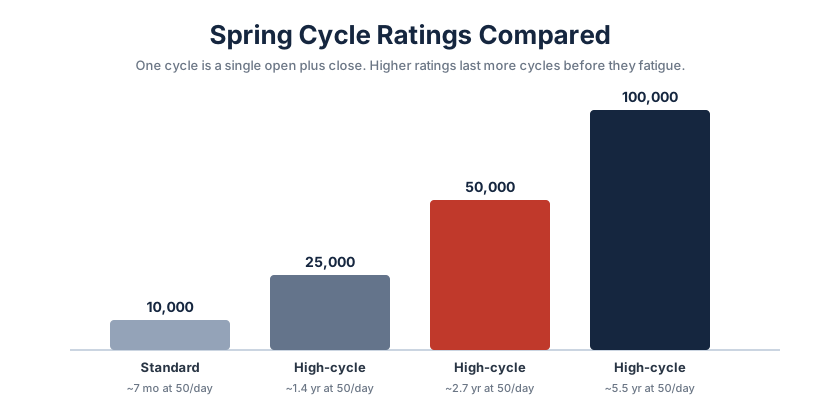
Lifespan depends on how often the door cycles, not on the calendar. The math is simple once you know the daily count:
| Spring rating | At 10 cycles/day | At 30 cycles/day | At 50 cycles/day |
|---|---|---|---|
| 10,000 (standard) | About 2.7 years | About 11 months | About 7 months |
| 25,000 | About 6.8 years | About 2.3 years | About 1.4 years |
| 50,000 | About 13 years | About 4.5 years | About 2.7 years |
| 100,000 | About 27 years | About 9 years | About 5.5 years |
The pattern is clear: the heavier the traffic, the more a high-cycle spring earns back. A door that opens 50 times a day would chew through standard springs in well under a year, so the upgrade pays for itself in avoided downtime and service calls. For the residential side of the same question, see how long garage door springs last on a home door.
Who needs high-cycle springs
Match the spring to the real cycle count, not the door size:
- High-traffic commercial doors at warehouses, docks, auto shops, and fleet bays that cycle dozens of times a day.
- Doors tied to the operation, where a spring failure stops shipping or locks out work.
- Hard-to-access or oversized doors, where the labor to swap springs is high enough that fewer replacements is worth a lot.
- Any door where downtime is expensive, even a residential one that cycles unusually often.
A quiet door that opens a few times a day does not need them. Putting high-cycle springs on a low-use opening is spending money the door will never use up.
Spec the right spring for your door
Getting the spring right means measuring the door weight, the drum size, and the real daily cycle count, then choosing a wire size and length that balances the door and hits the lifespan you want. Guessing here is what causes early failures and doors that feel heavy or slam. We size springs to the actual door and traffic, and we keep doors balanced so the springs and the operator both last. The same logic drives our commercial maintenance plans, which catch a tiring spring on a planned visit instead of mid-shift.
We supply and install high-cycle garage door springs across the Denver metro with flat-rate quotes and free estimates. Tell us the door and how often it cycles, and we will spec the spring that keeps it running.
People also ask
Commercial garage door maintenance: how often?
How often does a commercial garage door need maintenance? It depends on cycle volume. Here is the schedule and what a preventative maintenance plan covers.
Read full answerHow long do garage door springs last?
How long do garage door springs last? Most last 7 to 10 years, or about 10,000 cycles. Denver cold and daily use shorten that. Here's what affects it.
Read full answerCommercial vs residential garage doors explained
Commercial vs residential garage doors: how they differ in build, cycle life, springs, operators, and code, and which one your building actually needs.
Read full answerWhat is the difference between a commercial and a residential garage door opener?
Commercial openers are built for heavy doors, high daily cycle counts, and continuous operation under multiple users.
Read full answerCurrent offers
Save while you are here
Browse our current specials and claim the one that fits your door.
$30 Garage Door Lube & Tune
Lubrication and adjustment with a 21-point safety inspection and a full sensor check. Catch small issues before they become expensive repairs.
Claim this offerUp to 10 Free Rollers with Garage Door Repair
Get up to 10 free standard garage door rollers with a garage door repair. The free rollers are the part only; labor is not included.
Claim this offerBuy One, Get One Free Garage Door Spring
Buy one garage door spring and get the second spring free, part only, when your door needs two springs.
Claim this offerHave a garage door problem now?
Tell us what your door is doing and we will tell you what is likely wrong and what it costs. Same-day service across the Denver metro.