Repair
Do the springs or the opener lift my garage door?
Happening to you right now? Here's how we fix it: opener clicks, door won’t open
This sounds like a technicality, but it changes how you diagnose a stuck door. Knowing which part really moves the weight tells you whether you have a spring problem or an opener problem. Here is how it works.
How the springs and opener share the work
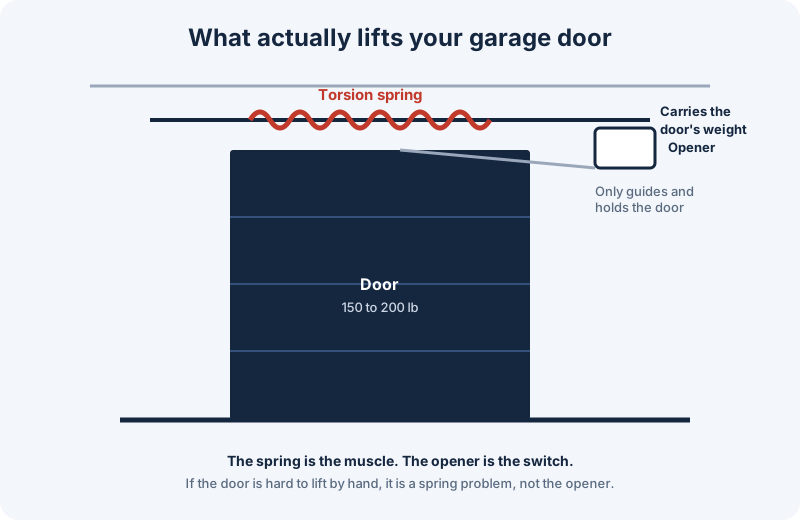
Think of the door as balanced, not powered. The system has two jobs, split between two parts:
- The springs counterbalance the weight. A wound torsion spring stores energy and offsets the door's weight so the door is nearly weightless to move. A well balanced door will hold its position halfway open with no opener attached.
- The opener guides and triggers. The motor pulls the door along the track with a chain, belt, or screw, holds it closed, and reverses it if the sensors are blocked. It is sized to move a balanced door, not a dead weight one.
So the spring is the muscle and the opener is the hand on the switch. When the spring is healthy, the opener barely works. When the spring fails, the opener is suddenly asked to lift the entire door, which it was never built to do.
Why this matters when something breaks
Getting the roles straight saves you from fixing the wrong part. A quick way to tell them apart:
- If the door is hard to lift by hand, it is a spring problem. Pull the red release cord to disconnect the opener and lift the door yourself. If it feels extremely heavy or will not stay up, the spring has lost its counterbalance.
- If the door lifts easily by hand but the opener will not move it, it is an opener problem. That points to the motor, gears, logic board, or settings, not the springs. Our guide on a garage door opener that will not work covers those checks.
People often buy a more powerful opener to fix a door that is hard to lift. That is the wrong fix. A bigger motor just masks a failing spring while straining harder against the weight, and it can burn out faster. The real repair is to restore the spring's counterbalance.
What happens when the springs fail
Once a spring breaks, the door's full weight lands on parts that were never meant to carry it:
- The opener strains, the gears can strip, and the motor can overheat.
- The lift cables go slack and can jump off the drums.
- The door can drop fast or hang crooked, which is a safety hazard.
That cascade is why running the opener against a broken spring often turns a single spring repair into a spring plus opener repair. If the door bangs, sags, or suddenly feels heavy, stop pressing the button.
How to test which part is the problem
You can sort a spring problem from an opener problem in about two minutes, and it is safe to do. Close the door, then pull the red emergency release cord to disconnect the opener. Lift the door by hand to about waist height and let go.
A balanced door with healthy springs holds its position where you left it, or drifts only slightly. If it slams down or feels like you are lifting a barbell, the springs have lost their counterbalance, and that is your repair. If the door lifts smoothly and stays put but the opener would not move it on power, the springs are fine and the problem is in the opener, the gears, or the settings.
Reconnect the opener by pulling the cord again and running the door until it relinks. If the hand test points to the springs, stop running the opener so it does not strain against the weight, and call a tech.
When to call a pro
If your door is hard to lift by hand or will not stay balanced, the springs need attention, and spring work is not a DIY job. A wound torsion spring holds enough energy to cause serious injury, so leave the winding to a trained tech.
Our crews in Denver, Lakewood, and across the Front Range can tell a spring problem from an opener problem in minutes, and we carry common spring sizes on the truck for same-day fixes. We restore the balance so the opener does the light work it is meant to do. Call our 24/7 line at (720) 421-6489 if your door has gotten heavy or your opener is straining.
Related garage door guides
People also ask
Why is my garage door opener not working?
Garage door opener not working? Check the power, remote battery, sensors, and travel limits first. Here is what is DIY-safe and what needs a tech.
Read full answerHow do I know if my garage door spring is broken?
Is your garage door spring broken? Look for a loud bang, a 2 to 4 inch gap in the spring, or a door that won't lift. Here are the signs to check.
Read full answerHow does a garage door work?
A garage door works on counterbalance: tightly wound springs store energy that offsets the door's weight, so the door feels nearly weightless.
Read full answerWhy won't my garage door stay open when I lift it by hand?
Your springs are no longer carrying the door's weight. A balanced door stays put when you release it 3 to 4 feet up. One that slides shut is under-sprung or has a broken spring; one that climbs on its own is over-sprung. The opener is not the cause, and neither version is a DIY fix.
Read full answerCurrent offers
Save while you are here
Browse our current specials and claim the one that fits your door.
$30 Garage Door Lube & Tune
Lubrication and adjustment with a 21-point safety inspection and a full sensor check. Catch small issues before they become expensive repairs.
Claim this offerUp to 10 Free Rollers with Garage Door Repair
Get up to 10 free standard garage door rollers with a garage door repair. The free rollers are the part only; labor is not included.
Claim this offerBuy One, Get One Free Garage Door Spring
Buy one garage door spring and get the second spring free, part only, when your door needs two springs.
Claim this offerHave a garage door problem now?
Tell us what your door is doing and we will tell you what is likely wrong and what it costs. Same-day service across the Denver metro.